
10 practical tips for authors giving book talks
Lessons on preparation, presence, and navigating the unexpected.

I’ve spent a lot of time over the past few months giving talks about my book SLIP. This month has been especially busy, with talks at Elizabethtown College in Pennsylvania last week, a virtual livestreamed talk with Emory University last night, and three talks at the Highland Park Literary Festival in North Texas tomorrow.
In preparation for these events, I’ve been thinking about lessons for other authors who want to do more public speaking about their books. In this week’s post, I’m sharing 10 related lessons learned from my own experiences. In subsequent posts, I may delve more deeply into how to find speaking opportunities and how to be your own best advocate as a speaker and author.
For now, I hope you’ll enjoy these tips:
1.) Picture audiences of all sizes. There’s no telling how many people will show up to your talk, so try not to get too hung up on the number of attendees. I find it helpful to envision small and large audiences. I sometimes picture myself standing in front of a room of five attendees and standing in front of a room of 500 attendees. This helps me mentally prepare for the possibility of a small or large crowd, or something in between.
2.) If possible, try to deliver a talk in a way that mimics the format of your book. When giving talks, I always weave together my personal narrative alongside reporting and research. This feels most natural because it’s a reflection of my writing style. I don’t always speak like I write, but when giving book-related talks, I like there to be alignment between my writing and speaking style. It helps audience members get a better sense of my voice on the page and in person.
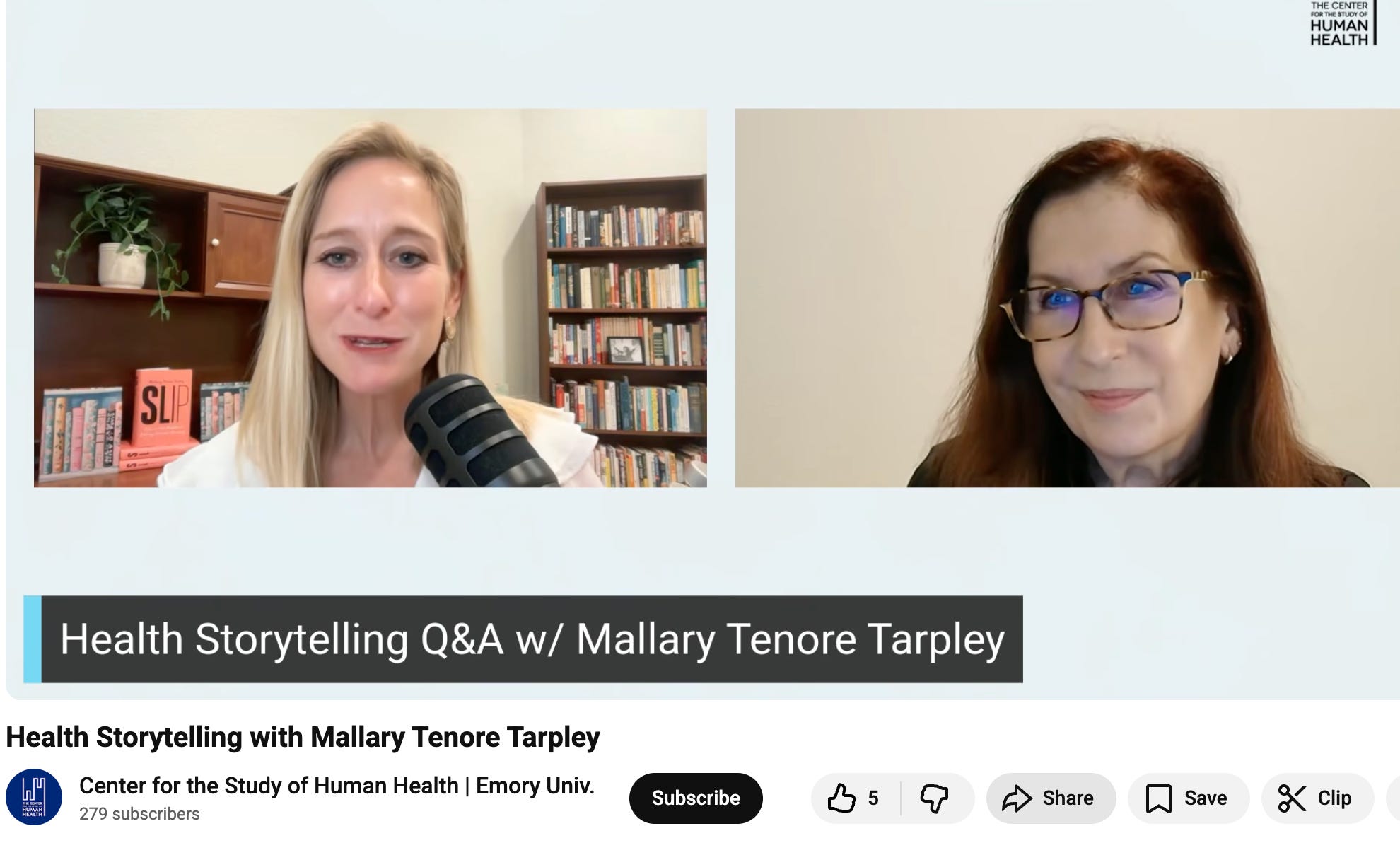
3.) Don’t rely solely on the Notes feature of your slides. Not long ago, I had written out several notes in one of my slide decks. The event I was speaking at, though, was live-streamed, meaning it was recording exactly what appeared on my computer screen. I therefore couldn’t access my notes. Fortunately, I had practiced the talk enough that I didn’t need them, but I still would have preferred being able to see them. If needed, have the notes pulled up on your phone, or print out your slide deck with the notes intact.
4.) Practice your talk with noises in the background. I sometimes do a run-through of my talks with distracting music playing in the background, or while my kids are at home and likely to be loud. This isn’t an ideal setup, but that’s the point: it helps me prepare for the possibility of distractions outside of my control. During one of my talks that was held during a meal, cutlery clanged against dinner plates. During another, ’80s music blared from the conference room next door. There was a party of sorts taking place, and the walls were thin. Fortunately, the music started toward the end of my talk, so I just projected and finished up. I also made a funny side comment about it as a way to acknowledge the disruption and connect with my audience.
5.) Be prepared for people to get up and leave. This happens often during talks, especially on college campuses when students may have to leave to get to class. When you see people leaving, it’s no doubt distracting. It’s also hard not to wonder: Are they leaving because of me? More often than not, they’re probably leaving because they have somewhere to be. Before giving a talk, I try to picture people’s departures. This helps me build mental toughness so that I’m better prepared for if and when it happens.
6.) Take cues from your audience. If your audience seems distracted or uninterested, pause and engage them. Ask a question, insert a quick aside or joke, tell a story. Stories help facts and research come to life, and they open up points of relatability. You have to be willing to go off-script in these moments — a skill that comes with practice and experience. This doesn’t mean you have to abandon your slides or your speech; it just means you need to take a momentary break from them so that you can help your audience feel like they’re being engaged and not just spoken to.

7.) Look for audience allies. I always try to look around the room when giving talks, with hopes of engaging audiences through not just my words but my eyes. Eye contact makes people feel like you’re speaking directly to them. If you’re lucky, there will be people who seem especially engaged. These are the head nodders and the smilers, the ones who resist the urge to stare at their phone and instead keep their gaze on you. I try to look at these audience members throughout because they give me reassurance that my talk has resonance. Also, keep in mind that frowning isn’t always negative. It can seem like people are judging you when they’re frowning throughout your talk, but I’ve learned from many years of teaching and speaking that a lot of people frown when they’re deeply engaged.
8.) Embrace silence during the audience Q&A. The transition from your talk to the audience Q&A can seem painful at times, especially when there aren’t any questions. It can be tempting to just assume that the audience doesn’t care, but remember: It’s hard to ask questions out loud and even harder to be the first person to do so. I always remind myself to embrace silence during these transitional moments, in between the talk and Q&A and in between questions. I do this in my classes, too, and inevitably someone ends up breaking the silence with a question or comment.
9.) Repeat questions. When people ask questions, repeat them out loud so that everyone can hear what you’re responding to. This is a common courtesy, and it also gives you another few seconds to think of a response. Repeating questions is especially important if your event is in person and it’s being livestreamed. I learned this the hard way after giving a talk at a livestreamed event and realizing after the fact that you couldn’t hear the audience members’ questions. (Side note: Try listening to your recorded events after the fact so that you can make note of what needs to be improved upon next time.) During the planning stage, see if the event coordinators can have some roving mics on hand to help with overall sound quality — and to make the event more accessible for those who may be hard of hearing.
10.) Always see if your books can be available on-site. Whenever I give talks, I try to have books available. I usually coordinate this ahead of time with the event organizers and see if they can place a bulk order of my book through a local independent bookstore. This isn’t always possible, depending on the scope of the event, but it never hurts to ask. When books aren’t available, it’s a missed opportunity. When they are, you get to share your book with readers who feel all the more connected with you, having heard you speak.
I’d love to hear from you! What related questions do you have? And/or what are some of your own tips and lessons learned?
Related content: What I learned from doing 75 podcast interviews: A guide for fellow authors | 10 tips for navigating your book’s publication week/month | Thinking about a book tour? Here’s what I learned from mine | How to get more media coverage for your book (without losing heart)
As always, so helpful, especially as a first-time author with book talks on my calendar. I never would have imagined people leaving as I talk, so I appreciate the heads up, as I think that would be deeply unsettling! Thank you.
Loving all of these posts about your book promotion experiences, Mallary! As a debut author without a publicist, I'm learning a lot as I go and posts like this are so helpful!